
CLINICAL JUDGMENT TRAINING
Stable Can Wait. Changing Cannot.
Nursing school teaches you what to know. CliniQ teaches you what to do first, how to spot the patient who is changing, decide who cannot wait, and explain the reasoning behind your priority.

Live case
Post-op sepsis
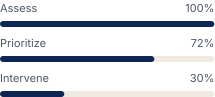
Which finding just changed the picture?
Who on your assignment cannot wait?
What do these clues mean together, not separately?
Why this patient, and why first?
THE PLATFORM
A learning system built around how nurses actually think.
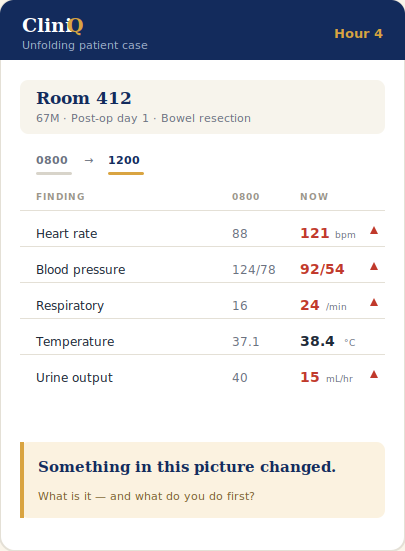
Unfolding Patient Cases
Clinical Judgment
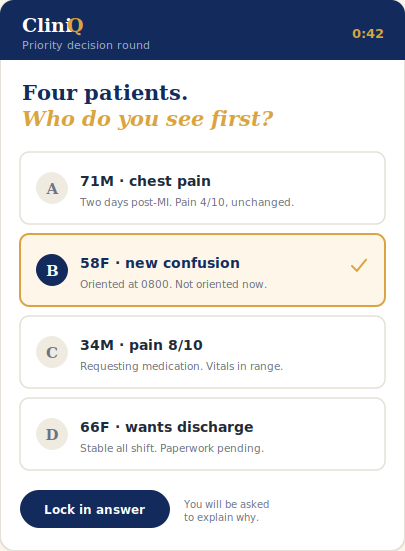
Priority Decision Rounds
Prioritization
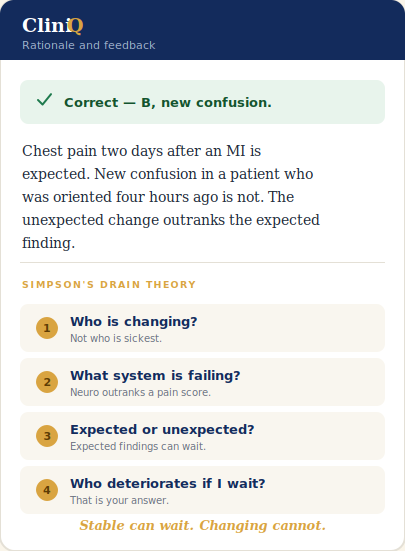
Rationale & Feedback
Case-Based Learning
Made for learners standing at the edge of real practice.

NURSING STUDENTS
Pre-licensure students preparing for NCLEX
Build the confidence to move from memorized answers to reasoned decisions with structured practice, review and feedback.
- ADN & BSN programs
- New-grad readiness
- NCLEX-NGN aligned

EDUCATORS & FACULTY
Nurse educators and clinical instructors
Assign cases, track cohort performance and identify reasoning gaps before they show up on the floor.
- Cohort analytics
- Rubric-aligned cases
- Clinical judgment resources
THE CLINIQ APPROACH
Knowledge tells you what. Judgment tells you when.
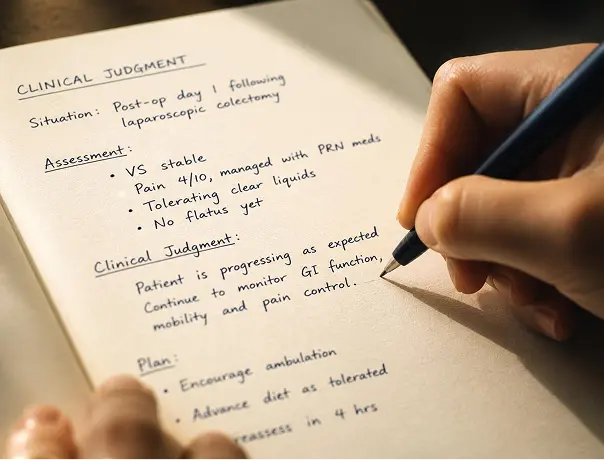
Knowing a fact is only the beginning. Clinical judgment means knowing how to use that information when the patient situation changes.
CliniQ helps you move from simply knowing information to understanding what matters, where your attention should go, and what decision comes next.
- Informed by the NCSBN Clinical Judgment Measurement Model
- Structured to build reasoning, not memorization
- Feedback loops that make thinking visible
THE CLINIQ OUTCOME
By the end of CliniQ, you will think and practice differently.
Recognize what matters
Identify the information that should influence your decision.
Prioritize with purpose
Determine what needs attention first.
Connect the clues
Bring assessment findings together instead of viewing them in isolation.
Make thoughtful decisions
Use a consistent process when deciding what to do next.
Explain your reasoning
Understand why one decision makes more sense than another.
Build clinical confidence
Develop a repeatable approach for unfamiliar patient situations.
Your Instructor
Built by Professor Simpson
Delondria Simpson, MSN, RN, CCRN, is a nurse educator, critical care nurse, and clinical judgment coach who helps RN and PN students move from memorization to safe clinical decision-making.

FREE RESOURCE
Free Clinical Judgment Survival Checklist
- Identify the information that matters most
- Recognize changes in the patient situation
- Ask better clinical judgment questions
- Practice prioritizing what comes first
- Build a repeatable thinking process
FAQ
Answers, before you ask.
Still have a question? Send it over. Professor Simpson and the CliniQ team answer them personally.