
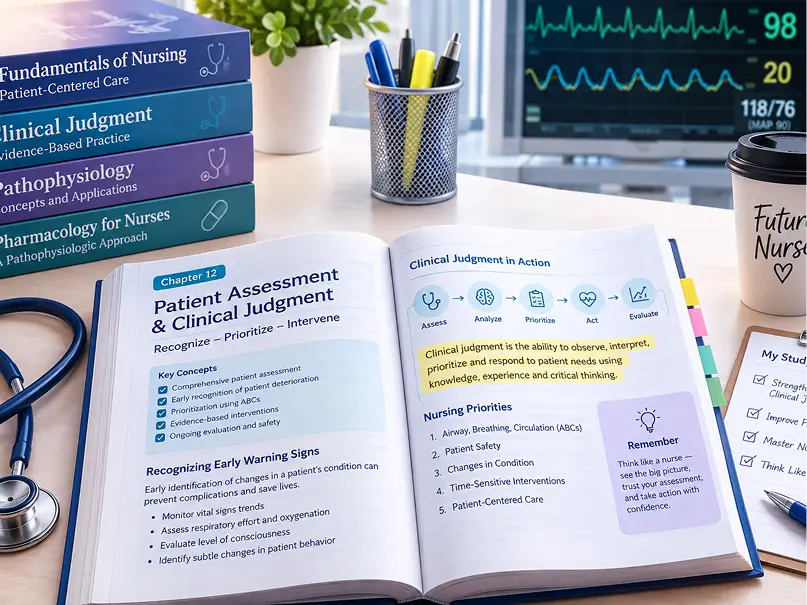
Make Better Clinical Decisions with Confidence
Every patient encounter presents unique challenges that require nurses to assess information, prioritize care, and make timely decisions. Clinical decision-making is more than applying textbook knowledge—it’s the ability to analyze patient data, recognize subtle changes, and determine the safest course of action.
Research consistently shows that strong clinical judgment leads to improved patient outcomes, fewer medical errors, and greater confidence among healthcare professionals. Fortunately, these skills can be developed through evidence-based learning strategies and consistent practice.
In this article, we’ll explore five proven approaches that help nursing students and professionals strengthen their clinical decision-making abilities.
What Is Clinical Decision-Making?
Clinical decision-making is the process of collecting patient information, interpreting clinical findings, evaluating possible interventions, and selecting the most appropriate action based on evidence, experience, and patient needs.
Effective decision-making combines:
- Clinical knowledge
- Critical thinking
- Patient assessment
- Prioritization
- Reflection
- Evidence-based practice
Rather than relying on memorization alone, nurses must learn how to connect clinical findings to meaningful actions.
Why Clinical Decision-Making Matters
Healthcare environments are increasingly complex. Patients often present with multiple health conditions, rapidly changing symptoms, and urgent care needs.
Strong clinical decision-making helps nurses:
- Recognize patient deterioration early
- Improve patient safety
- Reduce preventable errors
- Prioritize competing clinical needs
- Communicate effectively with healthcare teams
- Build confidence in high-pressure situations
Developing these skills is essential for both nursing students and experienced professionals.
Practice with Realistic Case-Based Learning
Case-based learning allows learners to apply theoretical knowledge in realistic clinical situations.
Instead of memorizing isolated facts, students evaluate patient histories, interpret assessment findings, identify priorities, and recommend interventions.
Benefits include:
- Stronger critical thinking
- Improved clinical reasoning
- Better retention of knowledge
- Increased confidence in decision-making
- Preparation for real-world patient care
Interactive patient scenarios encourage learners to think through problems just as they would in a clinical setting.