
Developing Clinical Judgment. Transforming Future Nurses.
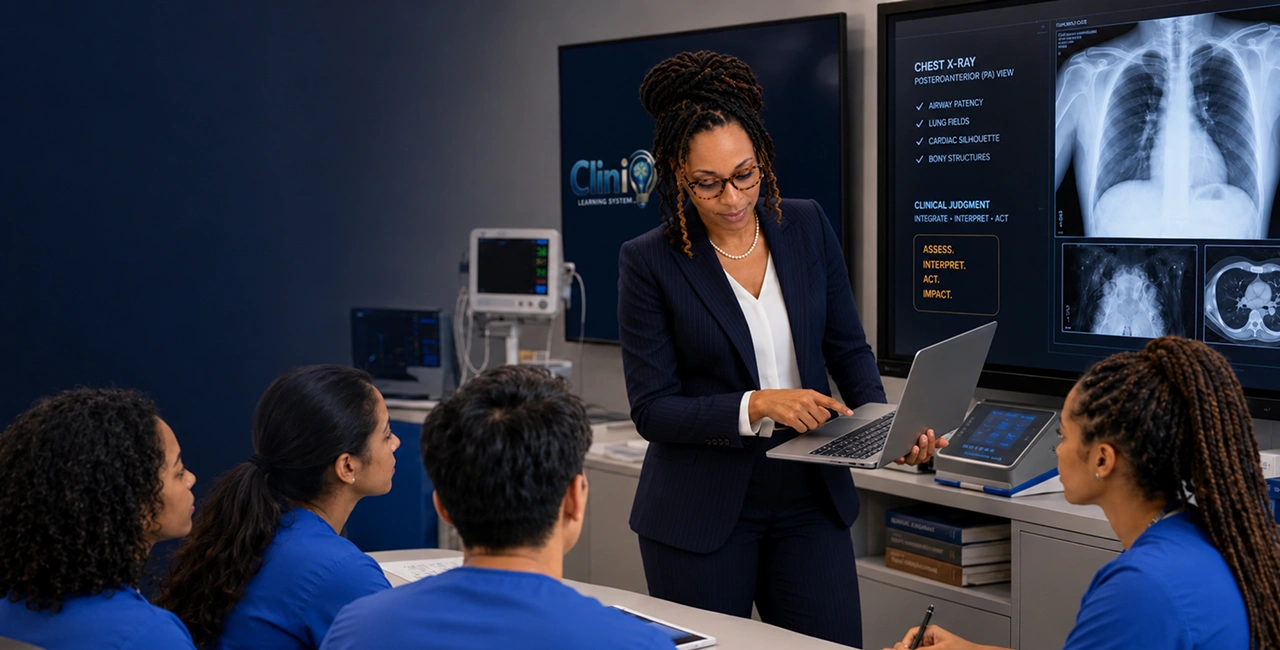
Competency improvement across tested modules.
Practice recognizing what matters and making thoughtful decisions.
Build a structured approach to deciding what needs attention first.
Connect patient information and use it to guide your thinking.
Develop a repeatable approach to working through patient situations.
Why CliniQ Exists
Nursing education provides essential knowledge, but learners also need opportunities to practice applying that knowledge to patient situations.
- Knowing what information matters
- Connecting multiple patient findings
- Determining what needs attention first
- Explaining the reasoning behind a decision
CliniQ provides structured opportunities to practice clinical judgment, helping learners move from knowing information to using it thoughtfully in patient situations.
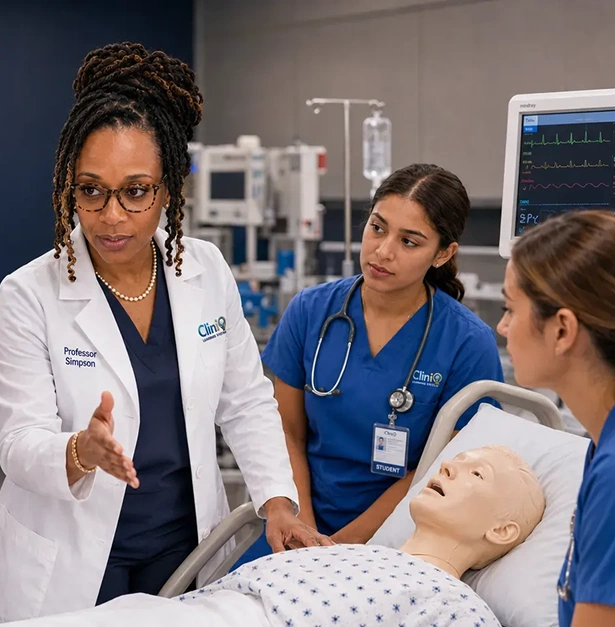

Why Choose CliniQ
- Stable patients talk. Unstable patients change.
- Expected vs. unexpected
- Acute vs. chronic
- Who is circling the drain?
- Priority patient thinking
- Think your way to the safest answer
Meet Professor Simpson
CliniQ Learning Systems was built from a problem Professor Simpson kept seeing in nursing education: students could know the disease, know the lab values, and still freeze when asked one question – who needs you first?
Professor Simpson is a nurse educator and critical care nurse with more than two decades of nursing experience. Her teaching focuses on helping learners recognize patient change, connect clinical findings, prioritize competing needs, and explain why one patient cannot wait.
CliniQ turns that teaching approach into structured practice so learners can move beyond memorizing the right answer and start working through the decision.
Clinical Judgment Practice
Patient Prioritization
Clinical Reasoning
Structured Learning
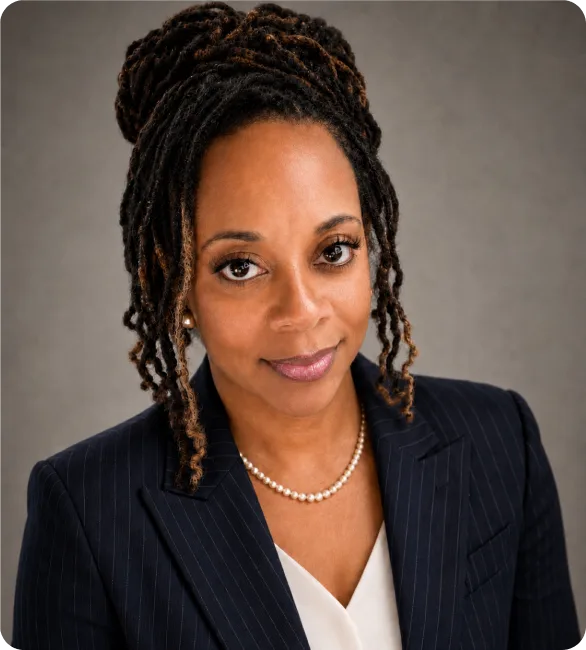
I Teach Nursing Students How to Connect the Dots.
If you have ever stared at a nursing question and thought:
“I KNOW this content… so why can’t I figure out what they want from me?”
Welcome. You are exactly who I built CliniQ for.
I’m Delondria Simpson, MSN, RN, CCRN, CNE—Professor Simpson to my students. I’m a nurse educator, clinical judgment coach, lifelong mentor, and the person who will probably ask you “Why?” three more times after you give me an answer.
Yes, I heard you the first time.
I want you to understand your reasoning well enough to explain it—and recognize when new information should change your decision.
I bring more than 25 years of healthcare experience, including 16 years in critical care. I’ve worked at the bedside, served as a charge nurse, helped manage emergencies, and worked in hospital operations.
I’m also pursuing my Doctor of Nursing Practice, because developing the next generation of nurses means continuing to grow myself.
Throughout my career, I’ve watched excellent teams work through difficult situations. I’ve also seen what happens when one important piece gets missed.
Somewhere along the way, I realized something about myself: I have an eagle eye for gaps.
Give me a patient situation, a hospital process, or a nursing question, and I naturally start asking: What’s missing? What changed? What doesn’t make sense? What could become a problem if we don’t address it now?
Today, I use that same approach to help nursing students connect what they know to what their patients need.
DNP
Doctor of Nursing Practice, in progress
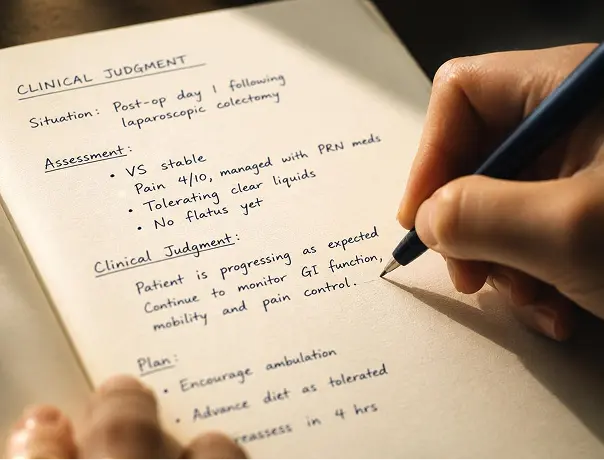
Sometimes, the struggle is a connection problem.
You know what heart failure is. You studied the medications. You memorized the normal lab values. Your color-coded notes are probably beautiful.
Then the patient has heart failure, kidney disease, increasing shortness of breath, six morning medications, and a family member asking when the doctor is coming.
Suddenly, the question feels very different.
Real patients do not arrive organized by chapter.
Your patient is never going to say, “Good morning, nurse. Today I will be your cardiovascular question.”
They bring their medical history, medications, lab results, anxiety, family dynamics, and three things nobody mentioned in report.
Then something changes.
Now what?
That is where we work together. We strengthen your knowledge where needed and practice using it to make decisions.
- What changed?
- What matters right now?
- What can wait?
- What could hurt this patient first?
- What information are you missing?
- What intervention makes sense—and why?
“Okay… but what is your patient telling you?”
You will have to explain your answer. “Because that one sounded the best” gives us somewhere to start, but we are going to dig deeper.
You can get an answer wrong and still learn something valuable. We will look at your reasoning, find where the connection was missed, and work through it. You do not have to arrive knowing everything.
You do have to be willing to think, ask questions, and try again.

Long before I officially became a professor, I was teaching nurses: at the bedside, during emergencies, after difficult shifts, and whenever someone needed another nurse to say:
“Come here. Let me show you something.”
That is still how I teach.
I will encourage you. I will challenge you. Sometimes, I will help you stop overthinking. Other times, I will send you back into the chart because there is a finding we need to look at more closely.
I want you to leave our conversation stronger than you came into it. Mentorship has always been part of who I am.

I created CliniQ for the student who studies for hours but struggles with priority questions. The student who says, “I understand it when you explain it, but I couldn’t see it on the test.”

And the student approaching graduation who suddenly realizes:
“Wait. They’re actually about to give me patients.”
Yes. They are.
Of course I want you to pass your next exam. I also want you to build the judgment to recognize change, explain your concerns, take appropriate action, and know when to ask for help.
I want those connections to carry into clinical, simulation, residency, and the moment a patient suddenly looks different.
Because eventually there will not be four answer choices.
There will just be your patient. And I want you ready.
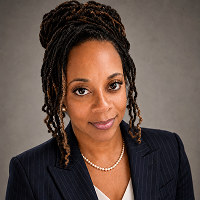
Professor Delondria Simpson, MSN, RN, CCRN, CNE
Clinical Judgment Coach • Nurse Educator • Lifelong Mentor Founder, CliniQ Learning Systems, LLC
Developing Clinical Judgment. Transforming Future Nurses.
Ready to Think Like a Nurse Before You Step Into Practice?
Practice the decisions you’ll be making on your first shift — unfolding patient situations, priority calls, and the reasoning behind each one.